
Amherst Deeds and Their Work
A deed conveys an interest in land. Amherst's historical collections include bargain-and-sale deeds, gifts, mortgages, bills of sale, and deeds of trust. Modern title work adds corrective deeds, easements, right-of-way agreements, boundary-line agreements, releases, assignments, substitutions of trustee, judgments, and plats. The label matters less than the parties and the legal description. Always note the book and page or instrument reference. That reference lets another source be checked against the same recorded deed.
| Instrument | What It Records | Why It May Appear |
|---|---|---|
| Bargain-and-sale deed | A transfer from grantor to grantee. | Sale or other conveyance of a tract. |
| Deed of gift | A transfer that may have little or no stated consideration. | Family or estate planning transfer. |
| Deed of trust | A security interest tied to a loan. | Financing recorded with land documents. |
| Release or satisfaction | Evidence that a prior secured interest was released. | Follow-up to a deed of trust. |
| Easement or boundary agreement | A right or line affecting described land. | Access, utilities, roads, or shared boundaries. |
| Executor or trustee deed | A transfer by a fiduciary in a stated capacity. | Probate, trust, or court-directed disposition. |
A deed of trust does not convey ownership. It secures an obligation instead. Watch for a later release or certificate of satisfaction that matches its reference to the original instrument. Amherst County deed records often sit beside judgments, liens, plats, and probate documents. A complete chain may need more than the sale deed.
Amherst Circuit Clerk Holds the Chain
Amherst County deeds live with the Circuit Court Clerk, who preserves permanent real-estate records and administers probate. The office sits at 113 Taylor Street, P.O. Box 462, Amherst, Virginia 24521. Its published phone is (434) 946-9321, and weekday hours run 8:00 a.m. to 4:30 p.m. The court page offers local service details but no anonymous grantor-grantee search. Before traveling or ordering, ask the Clerk what courthouse viewing, copy, or registration routes exist.
The image below shows the official Amherst Circuit Court page. Treat it as a contact route rather than a deed-index result. Confirm how to reach the custodian, then request the instrument by party names, approximate date, parcel, and any book or page reference.
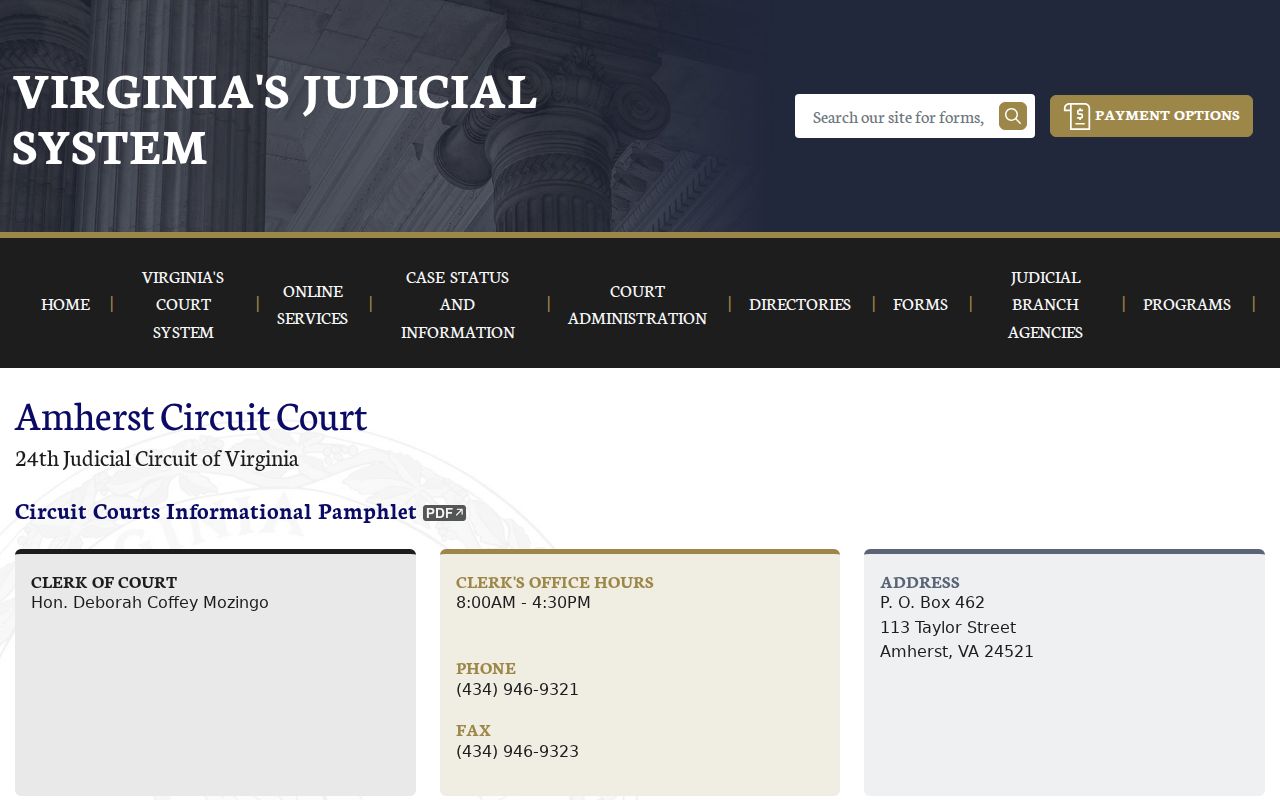
The distinction matters. A court landing page is not an online deed image or a searchable index, and knowing that saves a wasted trip.
Walk Back the Amherst Grantor Chain
Start the backward search with the deed that vested the current owner. The grantee receives the interest. The grantor conveys it. Once the current instrument is in hand, treat its grantor as the next grantee and locate that earlier acquisition. Repeat until the index runs out. Compare the tract description at each step, because a shared family name can link the wrong parcel when one owner conveyed several lots.
- Start with the newest deed and note recording date, parties, reference, parcel, and legal description.
- Search the grantor as a grantee in an earlier instrument.
- Compare acreage, adjoining owners, plat, easements, and prior book/page citations.
- Follow an executor, trustee, commissioner, or corporation in the capacity shown.
- Continue in older indexes or microfilm when the digital route stops.
- Grantor
- The party conveying the interest.
- Grantee
- The party receiving the interest.
- Chain of title
- The linked sequence of recorded transfers affecting a parcel.
- Legal description
- The written tract description, which may use acreage, bounds, roads, or plats.
Secure Amherst Land-Record Access
Virginia Courts runs Secure Remote Access to land records for select courts. Amherst sits behind that gateway. Registration with the local Clerk is required. Call it a registered route, not a free public search. Ask the Clerk which records open remotely, whether images can be viewed or downloaded, and whether a local application or fee applies. The service listing sets no online cutoff. It also promises no image-coverage period. The Virginia secure land-record gateway is the registration point. Its sign-up step is a real access limit for anyone expecting an open name search.
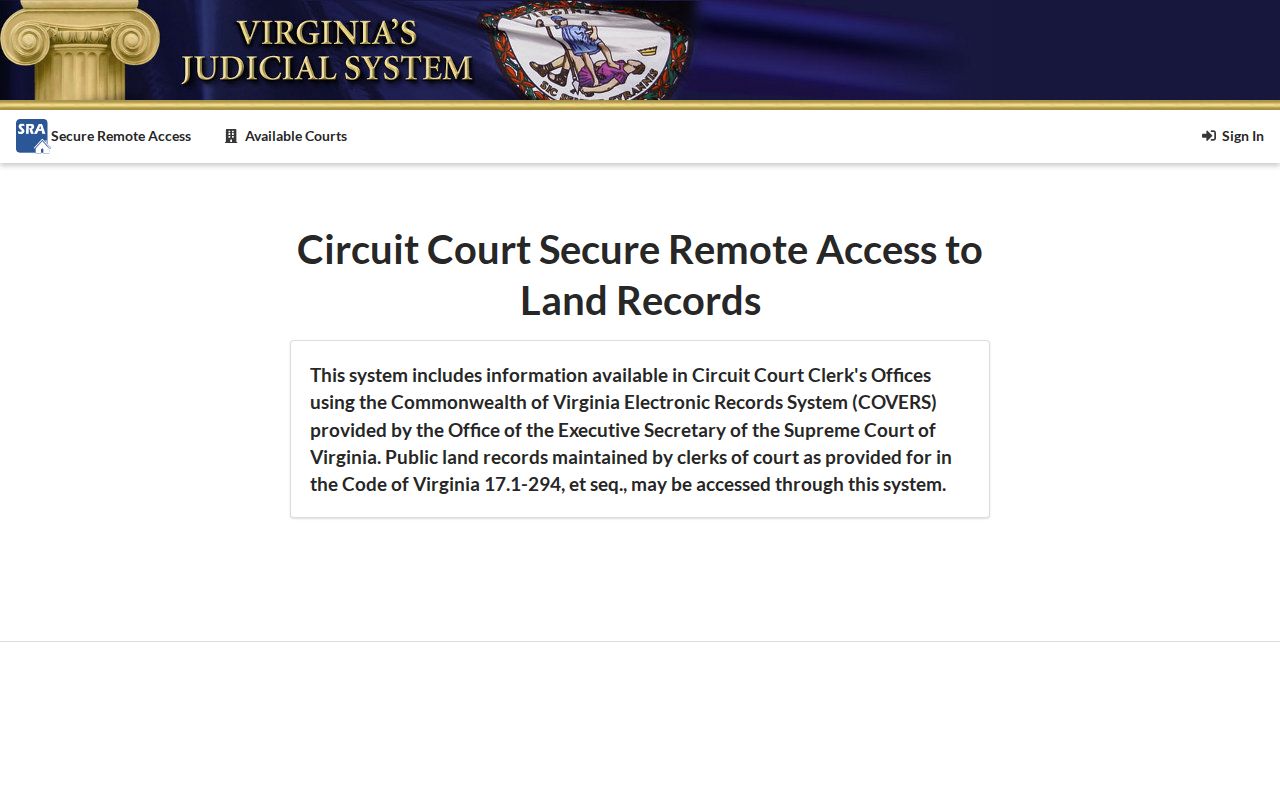
Remote access has limits. When the gateway cannot deliver a needed instrument, the local Clerk, a courthouse terminal, a written request, and the archive route all remain available.
Amherst’s Deed Cover Sheet
Amherst requires a Virginia Land Record Cover Sheet for any deed or instrument conveying or relating to an interest in real property. The online generator is just a filing aid. Its tabs run Introduction, Content, Grantors, Grantees, Parcels, and Review & Print. It accepts a saved XML upload. It prompts "N/A" for unknown fields. It cannot search the county's recorded deeds. The Amherst cover-sheet generator shows the official submission flow, not the Clerk's deed index. That difference matters when the task is historical research rather than recording a new instrument.
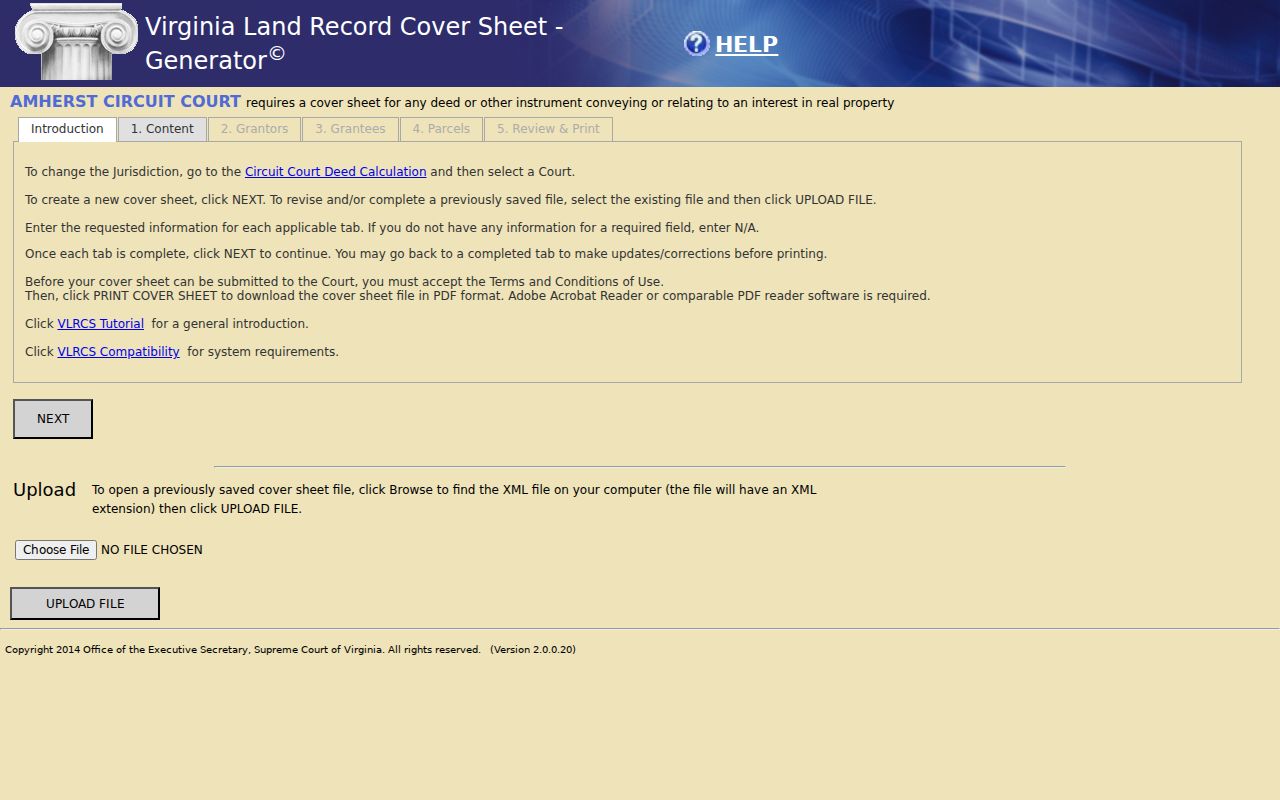
Ask the Clerk for current uncertified and certified copy rates. State recording tiers are $18 for instruments up to 10 pages, $32 for 11–30 pages, and $52 for 31 or more pages. Oversized plats or maps run $17 per sheet. Those figures are recording fees, not established copy prices.
Historic Amherst Deed Books
The Library of Virginia's Amherst microfilm reaches deep. Deed Books A–Z cover 1761–1846. Books AA–FF cover 1847–1865. Later lettered books run through 1900, and numbered Books 51–52 carry 1900–1903. General indexes span 1761–1924. Plat Book 1 covers 1761–1803, and Plat Book 2 covers 1803–1930. These reels are a strong route into older Amherst deed records, though a finding aid does not promise a digital image on every reel. The Library of Virginia finding page lists reel contents and indexes, so check the archive's current request options before assuming online access or a scan.
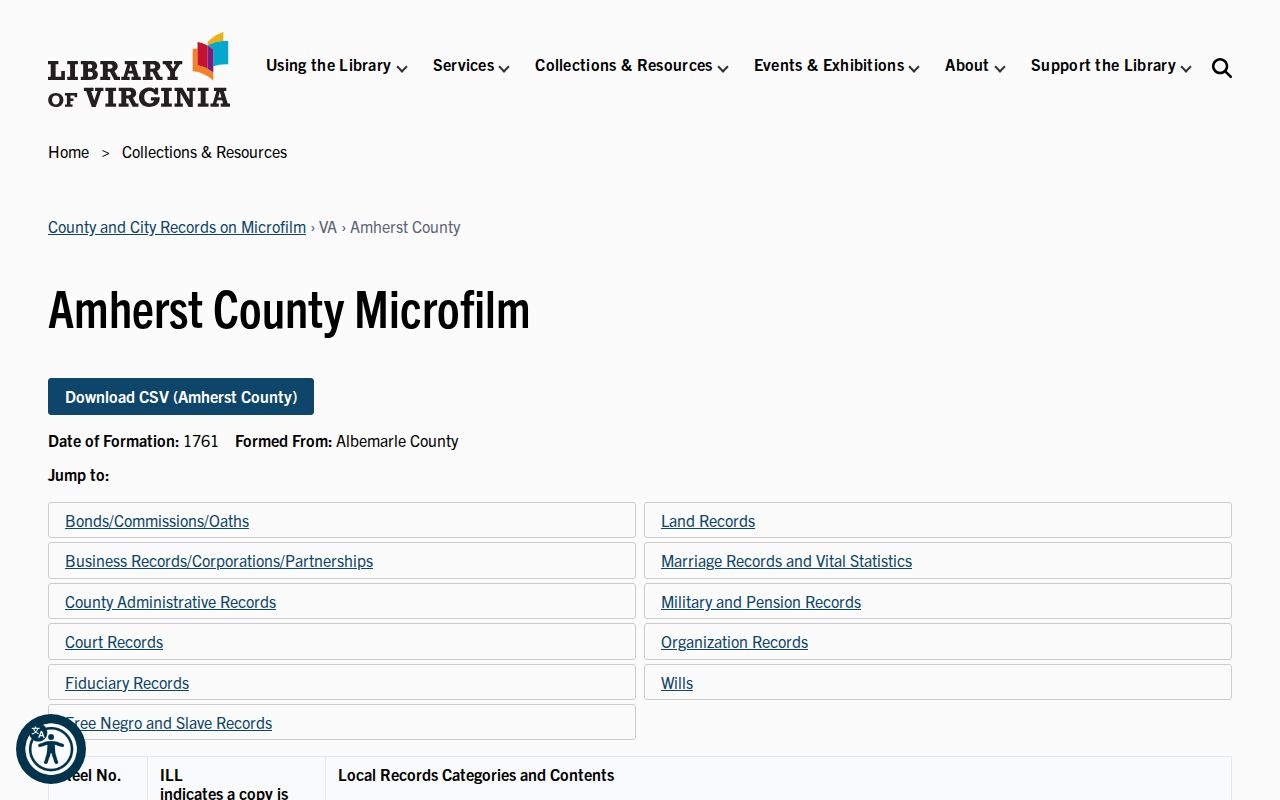
Older deeds often cite a prior volume. Carry that citation forward and match tract boundaries, not just the family name.
What Amherst Deeds Describe
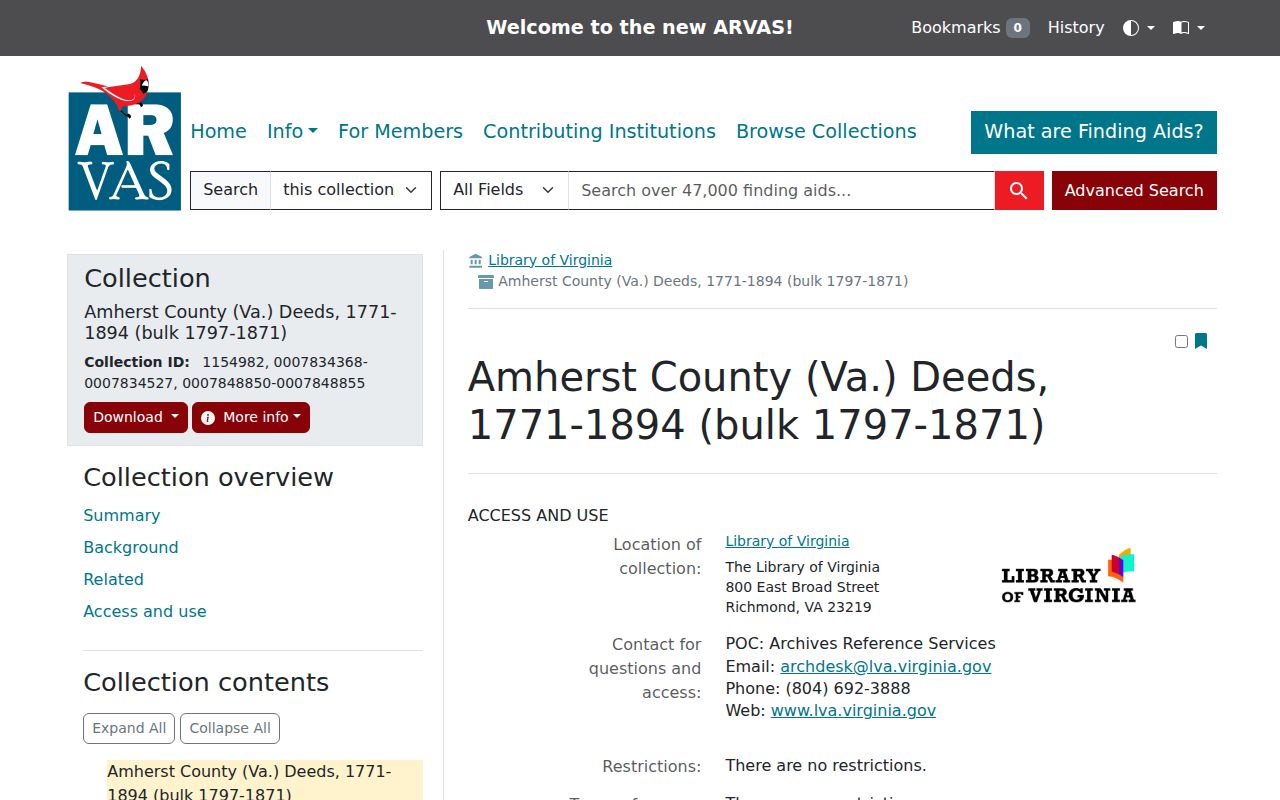
Amherst deeds from 1771 through 1894 carry a rich set of details. The ARVAS collection describes instruments that may name the parties' residences, the consideration paid, the tract's location, the property description, its boundaries, limitations, signatures, and witnesses. Some instruments include a plat. That level of detail can tie a transfer to a place even when an old road or farm name has no modern address to match it. When the consideration is nominal or missing, look closer. A gift, a partition, a dower release, or an estate distribution can all sit behind a deed that looks like a plain sale at first glance.
The ARVAS collection description appears below. It is a catalog record for a historical archive, not a current county index. Reading its coverage and instrument vocabulary helps a researcher decide what to request from the archive itself.
Some Amherst records document enslaved people as property through bills of sale or deeds of gift. That material belongs in a careful historical account, not a casual summary of a land transaction.
Requests and Copy Costs
A request for an Amherst County deed works best with specifics. Include the legal name variants. Add the parcel or tax-map number, a likely date range, and the book, page, or instrument number if known. State the format you want. Say whether you need inspection only, an uncertified copy, or a certified copy. A certified deed is often required for a court, an estate, or a closing. A plain copy can suffice for house history. The local page does not publish copy or certification prices. Confirm the cost with the Clerk.
Virginia FOIA covers existing non-exempt records described with reasonable specificity. It cannot force the office to build a title report or an ownership history. For a probate-linked transfer, ask for the deed separately. Also request the related will, fiduciary, or order record. That discipline keeps a court docket from being mistaken for a conveyance. The recorded instrument is what affects the land.
Limits of an Amherst Deed Search
A recorded deed shows an instrument in the public chain, nothing more. It is not a guarantee that title is clear. A search can still miss an unrecorded claim. It can also miss an indexing variant, a later correction, or a parcel split. Check any book and page reference against the full instrument and its legal description. For boundary questions, compare the recorded plat and deed with a survey. For real title certainty, use a title professional.
Recorded is not certified title. Confirm the newest instrument and any later release or correction with the Clerk. Do not treat the assessment roll as a substitute for the deed chain.
Amherst Court Cases and Land Records
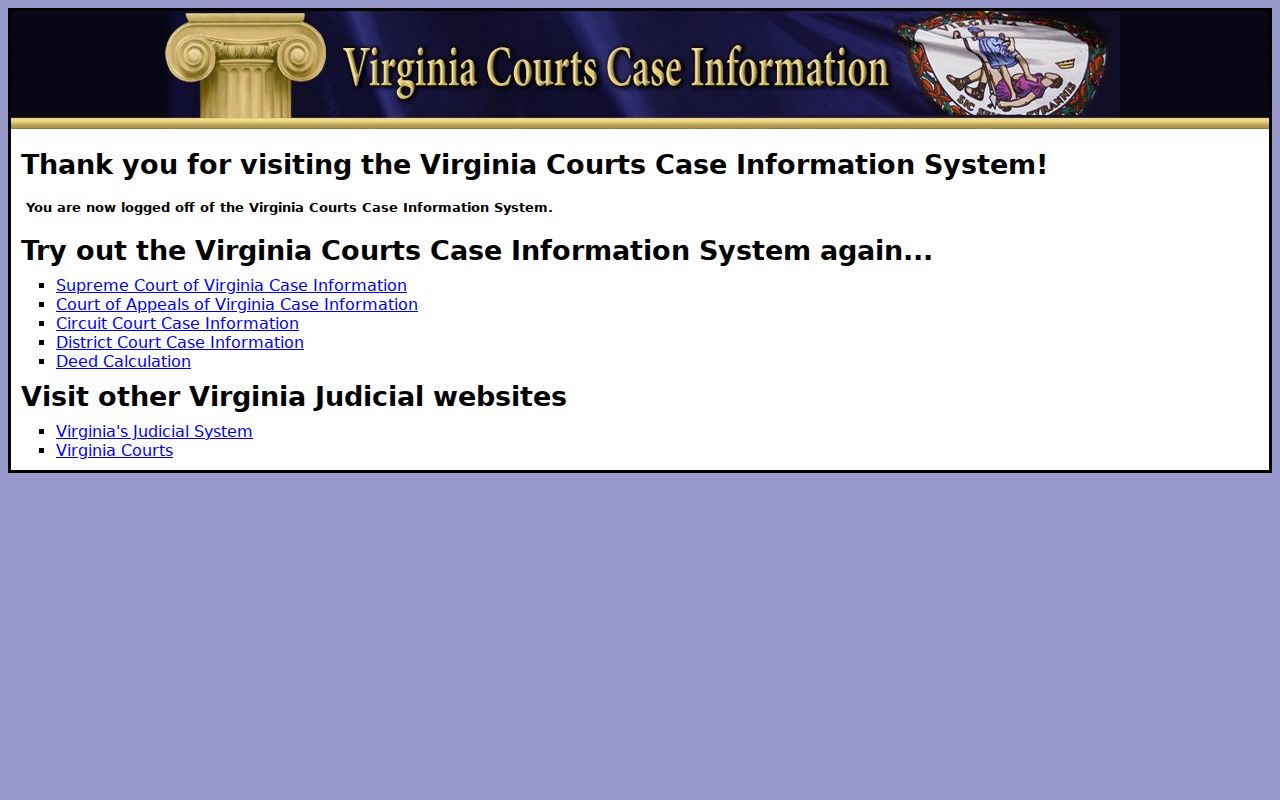
A recorded judgment can trace back to a lawsuit. So can a foreclosure, a quiet-title action, a partition, or a lis pendens. But the case docket is not the deed. Virginia's Circuit Case Information system lets a searcher pick a locality. From there, a searcher can search by party, case number, or hearing date, and Amherst participates. Its own disclaimer warns that online data may lag or differ from the certified record. The Clerk's file remains the authoritative route for a certified case document. The land-record instrument still has to be checked separately.
The Virginia Circuit Case Information entry page is shown below. It is a court case route, not an anonymous grantor-grantee index.
General District Court works separately from the circuit system. It offers a locality selector and searches by plaintiff or defendant, case number, or hearing date. The Virginia General District Court portal screenshot shows that setup. A case result can point a reader toward the right file, but ownership still turns on the recorded deed and its legal description.
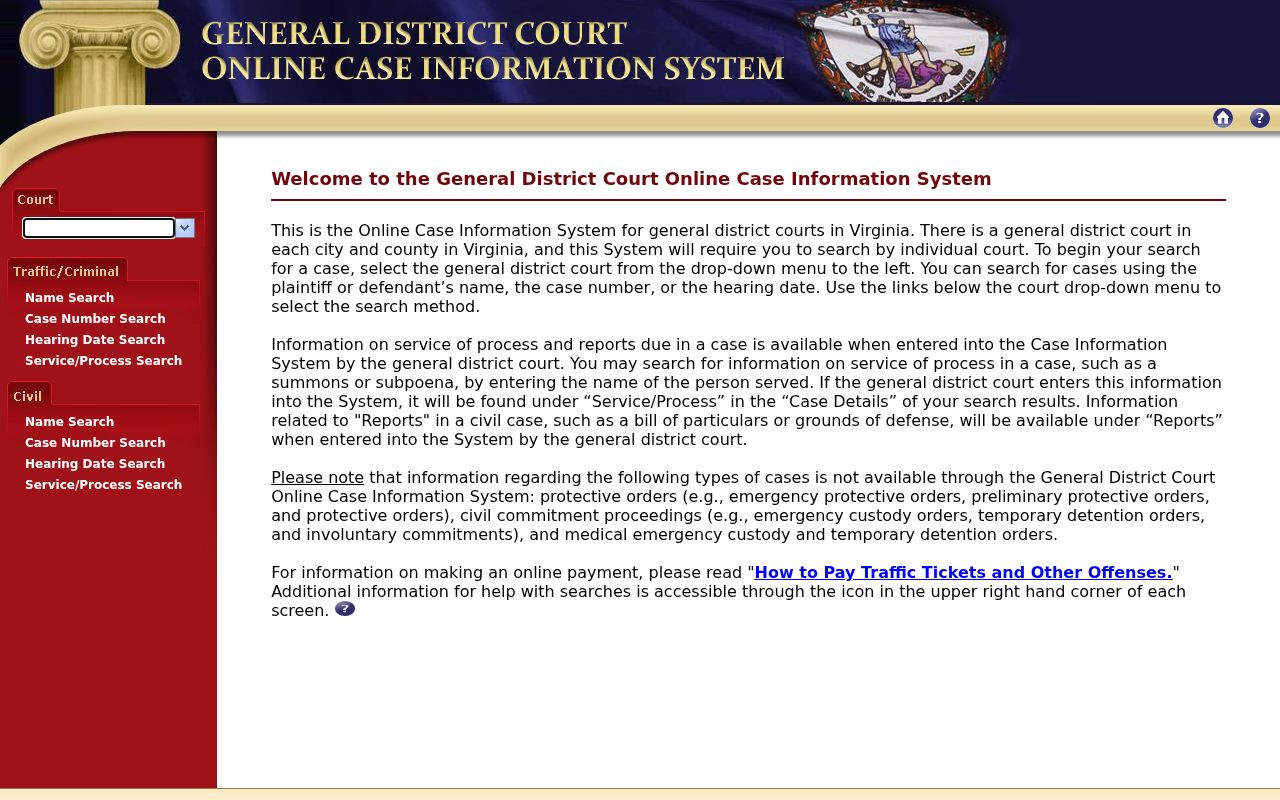
Protective orders, civil commitments, and certain medical custody matters are excluded from the GDC portal. A blank result is not proof that no court record exists.
Keep Amherst Court and Deed Searches Separate
A court search can locate a dispute, judgment, or proceeding. That proceeding may shed light on a property question. It does not replace the land-record search. The Circuit Case Information system offers a locality-based route. Search options cover parties, case numbers, and hearing dates. Amherst is available there. General District Court has its own locality selector plus party, number, and date modes. Neither system covers every recorded deed, mortgage, release, plat, or other instrument affecting title in Amherst County.
Use a case result to identify the court, the parties, and the case reference. Then ask the appropriate Clerk which file documents can be inspected or copied. If the case concerns a parcel, compare its description carefully. Check it against the deed and the tax-map reference before linking it to a specific tract. The online case display may not equal a certified court record. The land instrument carries its own recording reference. Write both references down separately. That way a case number is never mistaken for a deed book and page.